What does it really mean to live near the beach on Hilton Head Island? For many buyers, the idea sounds simple until you start comparing access, crowds, property types, and day-to-day routines. If you are thinking about buying near the shoreline, this guide will help you understand how beach living works on Hilton Head Island so you can choose a location that fits your goals. Let’s dive in.
What Beach Living Means Here
Living near the beach on Hilton Head Island does not always mean you have direct public access from your front door. The Town states that the beach itself is public from the ocean to the high-water mark, but the access points can be private. In practice, that means two homes with a similar distance to the shoreline may offer very different daily convenience.
That distinction matters when you start looking at villas, detached homes, and resort-style communities near the ocean. Some areas make it easy to walk or bike to a public beach park, while others may feel close to the sand but require more planning to get onto the beach. If beach access is high on your list, it helps to look beyond the map and focus on the actual route you would use.
The Town’s public beach parks include Alder Lane, Burkes, Coligny, Driessen, Fish Haul, Folly Field, and Islanders. Coligny is identified by the Town as the island’s most popular oceanfront park, which gives you a good sense of the activity level you can expect nearby.
Beach Areas Feel Different
Not every beachside location on Hilton Head Island has the same pace or atmosphere. Some areas are built around convenience and activity, while others lean more toward nature and a quieter daily rhythm. That is why choosing the right beach area is often just as important as choosing the right property.
Forest Beach Living
The Town describes Forest Beach as the heart of island life and one of the busiest spots on Hilton Head. Coligny Beach Park, shops, restaurants, and Lowcountry Celebration Park are all nearby, which makes this area appealing if you want to be close to activity and everyday conveniences.
For some buyers, that energy is a major plus. If you picture quick walks to the beach, nearby dining, and a lively setting during much of the year, Forest Beach may align with that lifestyle. The tradeoff is that easy access and a central location often come with more traffic, more parking demand, and more people during the busiest months.
Folly Field Setting
Folly Field offers a different setup. The Town highlights features like a boardwalk, parking, restrooms, showers, and seasonal lifeguards, which can make the area feel straightforward and practical for regular beach use.
If your goal is a beach-near home where access amenities matter, this type of setting can be attractive. It supports an easy beach routine without the same identity as the island’s busiest central park area.
Fish Haul Setting
Fish Haul has a quieter, more nature-oriented feel, according to the Town. It is located in Bay Gall, one of the island’s historic Gullah neighborhoods, and has more limited amenities than some of the island’s larger beach parks.
For buyers who value a less built-up beach experience, this may be worth a closer look. It offers a different kind of coastal lifestyle, one that may feel more focused on the natural setting than on high-traffic visitor activity.
Getting Around Near the Beach
One of the practical advantages of Hilton Head Island is that beach access is not only about driving. The Town says all public beach parks and accesses have beach matting, and it also provides a beach-wheelchair program. That can make a real difference for residents who want a more accessible shoreline experience.
The island also maintains 64 miles of public pathways and nature trails. In addition, the Town notes that private developments have more than 50 miles of pathways used by residents and guests within those communities. For buyers who want to walk or bike as part of daily life, that network is an important part of the beach-living equation.
During the busier part of the year, the Breeze trolley adds another option. The Town says it runs fare-free on a seasonal schedule, seven days a week, with arrivals about every 30 minutes. For beach-area residents, that can provide a useful non-car option when parking and traffic become more noticeable.
Seasonal Rhythms to Expect
Beach living on Hilton Head Island changes with the calendar. The Town’s official beach season runs from April 1 through September 30, and the higher-volume visitor season generally runs from March through September. If you are considering a primary home or second home near the ocean, it is smart to picture not just a weekend in spring but a full year of island life.
Parking is one of the biggest seasonal shifts. The Town enforces visitor beach parking fees from March 1 through September 7 at all beach parks except Coligny. Residents with a valid beach parking permit can park free in designated Town beach lots, and the digital permit is limited to two vehicles per address.
This is one of those details that sounds small until you live with it. If you plan to host guests, use different vehicles, or split time between homes, parking rules can affect your routine more than you might expect.
Weather and Wildlife Matter
Coastal living also comes with natural cycles that shape the beach experience. Sea turtle nesting usually begins in the first or second week of May and ends by late August, according to the Town. That is an important part of island life and one reason local beach rules are taken seriously.
Hurricane season officially runs from June 1 through November 30. Beaufort County’s 1991 to 2020 climate normals show an average maximum temperature of 76.8°F and about 45.02 inches of annual precipitation, which reflects the island’s warm coastal climate.
For buyers, this is less about worry and more about preparation. A beach-near purchase should always be evaluated with a clear understanding of seasonal weather patterns, storm awareness, and the upkeep that comes with a coastal environment.
Property Types Near the Beach
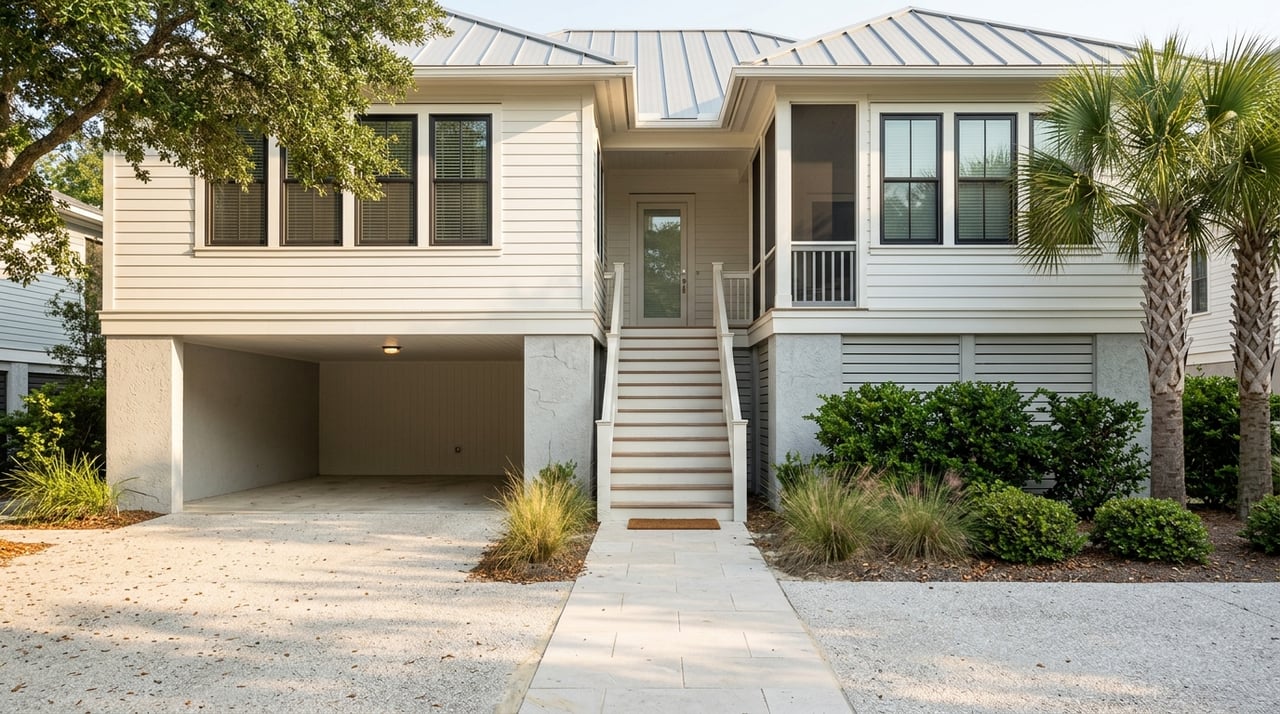
Beach-adjacent real estate on Hilton Head Island is not one single product. The island’s visitor materials describe a mix that includes oceanfront resorts, vacation homes, and beachside villas. That points to a broad range of ownership styles and day-to-day living experiences.
In practical terms, you should expect a mix of attached and detached homes in planned communities, with access and circulation patterns that vary by neighborhood. Some buyers want a lock-and-leave villa close to the beach. Others want a detached home with more space and a different level of privacy.
The island’s broader housing profile also gives useful context. Census QuickFacts shows an owner-occupied housing rate of 78.7%, a median owner-occupied home value of $687,400, and 39.2% of residents age 65 or older for 2020 through 2024. Those numbers are consistent with a market that includes long-term owners as well as retirement and second-home demand.
Tradeoffs to Think Through
The biggest tradeoff near the beach is usually convenience versus activity. A town assessment says the island averages about 53,000 people during the day and has more than 8,500 visitors on a typical day. In a place like Forest Beach, where the Town clearly describes one of the busiest spots on the island, that level of activity is part of the lifestyle.
That does not make one area better than another. It simply means your ideal location depends on how you want your day to feel. Some buyers want to step into the middle of island energy, while others prefer a setting that feels more tucked away.
A simple way to think about it is this:
- If you want walkable beach activity, focus on high-convenience areas.
- If you want a quieter coastal routine, pay close attention to beach park style and amenity level.
- If you want flexibility, compare how each community handles access, pathways, parking, and seasonal traffic.
Local Rules Shape Daily Use
Beach living also means understanding the local rules that protect the shoreline. The Town prohibits damaging dunes, leaving belongings overnight, digging holes deeper than 12 inches, and disturbing sea turtles or their eggs. Beachgoers must also fill in holes before leaving.
These rules are not just technical details. The Town explains that dunes act as storm barriers and wildlife corridors, and it notes in renourishment materials that a wider beach helps protect oceanfront homes, villas, and businesses. If you are buying near the sand, this coastal management system is part of what supports the long-term use and protection of the shoreline.
For second-home buyers or those considering occasional rental use, local operating rules matter too. The Town’s short-term rental guidance emphasizes quiet hours from 10 p.m. to 7 a.m. and parking only in designated spaces. Before choosing a beach-near property, it is important to understand both Town rules and any community-specific rules that may affect how you plan to use the home.
How to Choose the Right Fit
The best beach-near property on Hilton Head Island is not just the one closest to the water. It is the one that matches how you want to live, visit, or own over time. That usually starts with a few practical questions.
Ask yourself:
- How important is direct or easy public beach access?
- Do you want a lively area or a quieter setting?
- Would you rather walk, bike, drive, or use seasonal transit to reach the beach?
- Are you looking for a villa, resort-style property, or detached home?
- If this is a second home, do parking rules, quiet hours, and community guidelines fit your plans?
When you answer those questions early, your search gets much more focused. Instead of chasing a general beach idea, you can compare specific areas and property types in a more useful way.
If you are weighing beach access, community feel, or the right property type on Hilton Head Island, a clear local strategy can save you time and help you avoid the wrong fit. Michael Sutcliffe can help you evaluate neighborhoods, narrow your options, and move forward with a practical plan.
FAQs
What does living near the beach on Hilton Head Island actually mean?
- It usually means you are close to the shoreline, but not always that you have direct public beach access, since the beach is public to the high-water mark while access points may be private.
What is the busiest beach area for living on Hilton Head Island?
- The Town describes Forest Beach as the heart of island life and one of the busiest spots on the island, with Coligny Beach Park and nearby shops and restaurants.
What public beach parks are available on Hilton Head Island?
- The Town lists Alder Lane, Burkes, Coligny, Driessen, Fish Haul, Folly Field, and Islanders as public beach parks.
What should buyers know about seasonal beach life on Hilton Head Island?
- The official beach season runs from April 1 through September 30, with heavier visitor activity generally from March through September and more parking regulation during peak months.
What transportation options help beach-area residents on Hilton Head Island?
- Residents can use public pathways, private community pathways in many developments, and the seasonal fare-free Breeze trolley, which runs about every 30 minutes.
What types of homes are common near the beach on Hilton Head Island?
- Buyers should expect a mix of beachside villas, vacation-style properties, and detached homes in planned communities, with access and layout varying by area.
What local rules matter when living near the beach on Hilton Head Island?
- Key rules include protecting dunes, not leaving belongings overnight, filling in holes before leaving, avoiding disturbance of sea turtles, and following quiet-hour and parking rules for short-term rental use.