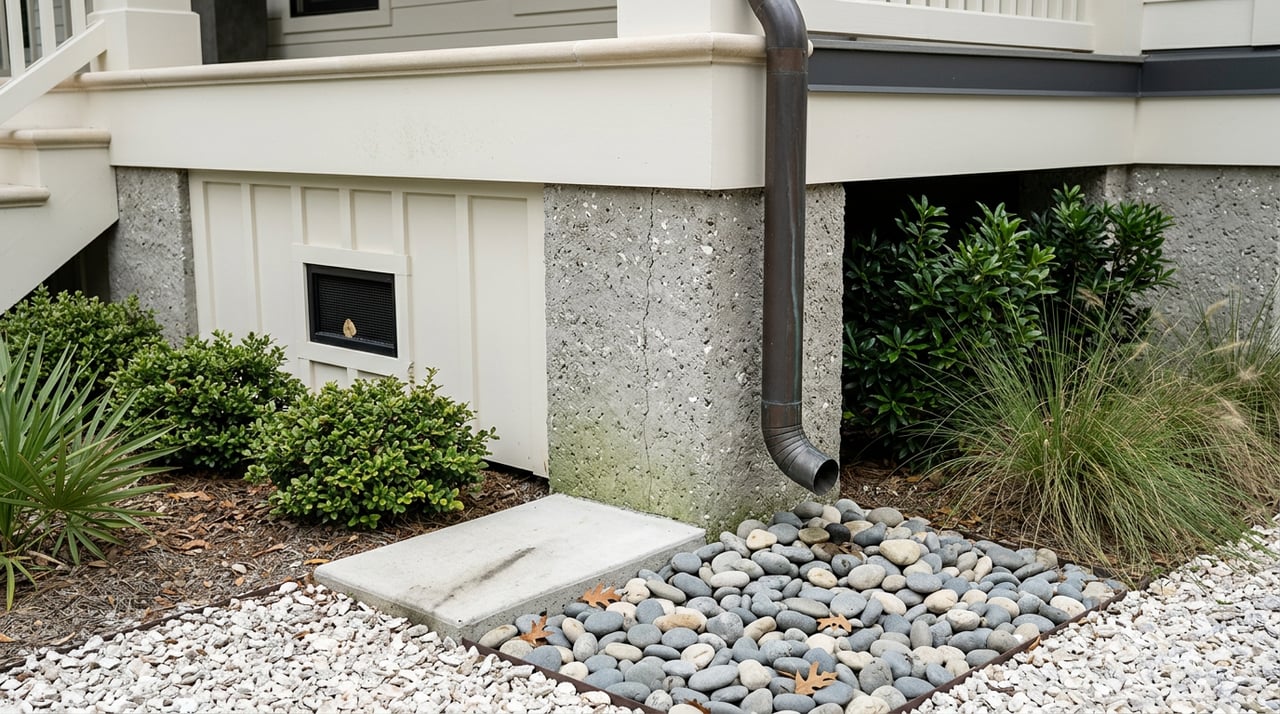
You are two weeks from closing on a Bluffton home. The general inspection came back clean enough to move on. Then the CL-100 lands, and the report is not clear. There is no active termite activity anywhere in the crawlspace. The problem is a moisture reading of 22% under the master bedroom and a small patch of surface fungi on a sill plate.
That is the moment most buyers realize the CL-100 is not really a termite letter. It is a moisture report with a termite section, and in Bluffton it is the single most common reason a closing gets rescheduled.
The termite letter is really a moisture report
The official South Carolina Wood Infestation Report, form CL-100, is regulated by Clemson University's Department of Pesticide Regulation under Section 27-1085 of the state code. The inspector is licensed as a pest control operator, and the form is titled around wood-destroying organisms, so buyers assume the whole exercise is about termites.
It is not. Under the same regulation, an inspector must document decay fungi, plumbing leaks, earth-to-wood contact, and wood moisture readings taken with a meter. In Bluffton, where humidity sits high most of the year and a large share of homes are built over ventilated crawlspaces or on pilings, the moisture side of the report is what typically drives the "not clear" outcome. Actual subterranean termite activity is comparatively rare in a given transaction. Damp wood is not.
The thresholds that decide the report are specific and worth memorizing before you go under contract.
| Wood moisture reading | What the inspector must do |
|---|---|
| 18% or lower | Considered acceptable for a properly vented crawlspace |
| 20% or higher | Excessive moisture must be reported and correction recommended |
| 28% or higher | Wood decay fungi become active and structural decay can occur |
Those numbers come straight from the SC pesticide regulation and Clemson Extension guidance published through the SC REALTORS association. A reading of 21% in a Buckwalter crawlspace is not a subjective call. The inspector is required to report it, and the lender is likely to require correction before funding.
The 30-day clock is the real deadline
The CL-100 is valid for 30 days from the date of inspection. That validity window is what turns a routine document into a scheduling problem, especially on Bluffton contracts where financing, appraisal, and CL-100 corrections often stack on top of each other.
If the inspection happens on day one of a 45-day contract and remediation stretches the closing past day 30, the lender will require a new CL-100. That means a second inspection fee for the buyer, a fresh set of moisture readings, and the possibility of a different result if it has rained in the meantime. In practice, this is why I schedule the CL-100 late in the inspection period rather than early, and why a delay of even a week can compound in a way a first-time Bluffton buyer does not expect.
The other timing trap is seasonal. Late summer through early fall is the wettest stretch in the Lowcountry, and crawlspace moisture readings track it. A house that would have passed easily in April can read 21% in September without anything having actually changed inside the home.
What the standard South Carolina contract actually obligates
Once the report comes back not clear, most buyers assume the seller is on the hook for whatever the inspector recommends. That is only partly true, and the mechanism is worth understanding before you write the offer.
Under the standard South Carolina residential contract, the seller is generally responsible for treating any active infestation and repairing structural damage caused by wood-destroying organisms. That responsibility is typically capped at a dollar figure or a percentage of the sales price, negotiated up front in the contract itself.
The cap matters more than the underlying obligation. On a $750,000 Palmetto Bluff cottage with a 1% cap, the seller's total exposure to CL-100 issues is $7,500. A full crawlspace encapsulation with a sump system and dehumidifier can run past that number without much effort.
When the recommended remediation exceeds the cap, the buyer has three choices: accept the property with the seller doing only what the cap covers, renegotiate the sale price or a credit, or exercise the inspection contingency and walk. This is where the deal actually gets made or lost, and it is why I push clients to think about the cap number during offer strategy rather than after the report arrives.
The Bluffton-specific triggers that push reports to "not clear"
The reasons a Lowcountry CL-100 comes back adverse are unusually consistent. In older Bluffton neighborhoods and in newer builds alike, the pattern repeats:
- Standing water in the crawlspace after a heavy rain, often from lot grading that pushes runoff toward the foundation rather than away
- Wood-to-soil contact where landscape mulch has been piled against siding or where a deck post sits directly on dirt
- Irrigation heads spraying the base of the house, which keeps the sill plate damp year-round
- Plumbing leaks under sinks or in the crawlspace that have been slow enough to escape notice
- Inaccessible sections of the crawlspace, which the inspector is required to flag rather than assume are clean
- Wood debris left under the house by builders or previous owners, which reads as a conducive condition even when nothing is active
Homes on the Bluffton side of the May River, older cottages in Old Town, and raised structures near Palmetto Bluff's lagoons show these issues more often than newer Buckwalter construction with poured slabs. The property type matters as much as the price point.
What remediation actually looks like
When correction is required, the pest control operator usually recommends one or more of a familiar set of fixes, in rough order of cost:
- Install a polyethylene vapor barrier over the crawlspace soil
- Add or unblock foundation vents to improve airflow
- Correct exterior drainage and pull mulch back from the foundation
- Install a sump pump and drain system where water intrudes constantly
- Add dehumidification or a power vent for aggressive moisture removal
- Move to a full encapsulation, which is the most durable and the most expensive option
A vapor barrier and vent adjustment on a modest Bluffton crawlspace can run under $2,000. Full encapsulation with a dedicated dehumidifier on a larger home can land north of $10,000. The gap between those numbers is precisely why the seller cap in the contract is worth negotiating with intent.
How to sequence the inspection so it does not derail your close
A short playbook for Bluffton contracts, built from patterns I see on almost every deal:
- Order the CL-100 late in the inspection period, not early, so the 30-day validity window aligns with your closing date
- Ask the listing agent whether a prior CL-100 exists from the seller's purchase, which can hint at chronic moisture issues
- If the home has a crawlspace, walk it yourself or send a representative before you remove the inspection contingency
- Confirm with your lender what documentation they require, because some out-of-state lenders on Hilton Head and Bluffton transactions ask for treatment proof beyond the CL-100 itself
- Negotiate the seller cap in the offer with a Lowcountry number in mind rather than an inland one
Handled this way, a not clear report becomes a line item in the negotiation rather than a threat to the closing.
A short FAQ
Is a CL-100 required for a cash purchase in Bluffton?
Not by law. It is a lender requirement, so cash buyers can skip it. Most experienced cash buyers in Bluffton order one anyway, because the moisture information is more useful than the general inspection on a crawlspace home.
Does the seller have to fix everything the inspector recommends?
No. Under the standard South Carolina contract, the seller is responsible for treating active infestation and repairing WDO damage up to the negotiated cap. Conducive conditions like vapor barriers or drainage work are not automatically the seller's obligation and are usually a negotiation point.
Can a CL-100 pass in August when it failed in April?
Rarely. Summer humidity generally pushes crawlspace readings up, not down. If a home has a documented moisture issue, expect it to persist until physical remediation is done.
What happens if the report expires before we close?
The lender will require a fresh inspection. The buyer typically pays for the reissue, and the new report may capture different moisture readings than the first.
If you are writing an offer on a Bluffton home with a crawlspace, or preparing to list one, the CL-100 is a document worth strategizing around before it lands on your desk rather than after. Michael Sutcliffe works through the inspection, the cap, and the timing with clients on both sides of the transaction. Schedule a consultation to walk through your specific property before the report writes the story for you.